 Reviews

 Proudly American

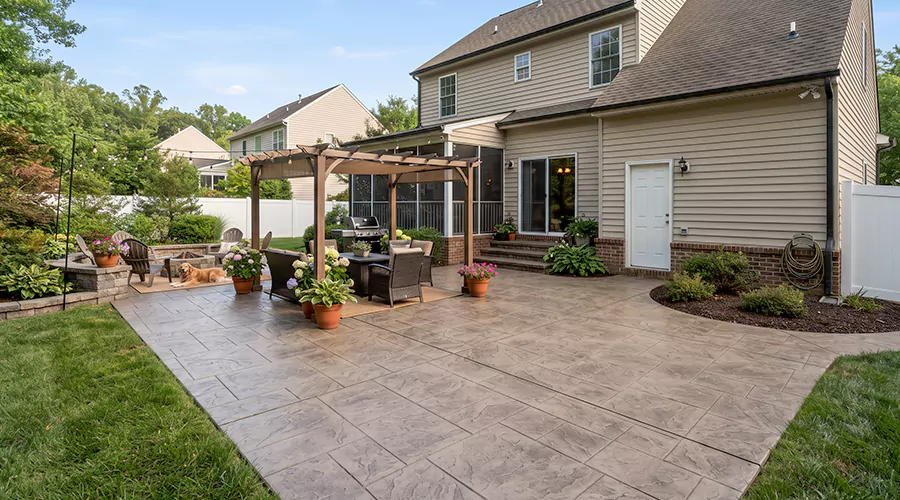
A concrete patio usually needs resurfacing when widespread surface wear appears but the slab underneath remains stable, with 2026 resurfacing prices commonly running about $3 to $5 per square foot. Resurfacing can correct worn texture or shallow surface damage without removing the entire slab.
Concrete patio resurfacing is most useful before cosmetic deterioration turns into deeper concrete failure. The condition beneath the worn surface, along with the need for water mitigation, matters more than the patio's age or appearance.
A patio that has sunk or developed major structural cracks needs a different repair approach. Covering a moving slab with a new overlay won't stop the movement underneath.
What Does Resurfacing a Concrete Patio Actually Do?
Resurfacing restores the upper surface of an existing concrete patio while leaving the original slab in place. The old surface is cleaned and prepared before a thin resurfacing material is applied. This method works when deterioration is near the surface and the underlying concrete remains structurally sound.
The new layer can cover:
- Light surface cracking
- Minor pitting
- Shallow spalling
- Uneven color
- Old surface stains
- Worn texture
- Previous cosmetic patches
Resurfacing isn't the same as pouring another normal concrete slab over the old patio. Resurfacing products are designed to bond to properly prepared concrete.
Patio restoration can involve several different treatments. Resurfacing sits between small localized repairs and complete slab replacement.
What Are the Signs a Concrete Patio Needs Resurfacing?
A patio becomes a good resurfacing candidate when damage is widespread enough that individual patches would leave an uneven appearance but shallow enough that the slab remains stable. Surface deterioration should be visible across several areas without major settlement or vertical movement between concrete sections.
Look for these 10 signs.
- The surface has widespread fading.
- Sun exposure can leave older concrete looking noticeably different across exposed areas.
- Several stains no longer respond well to cleaning.
- A new surface can create a more uniform appearance when discoloration has become permanent.
- Small pits cover several sections.
- Pitting affects the upper surface while the main slab can remain firm underneath.
- Light spalling has started.
- Shallow flaking can expose a rough surface without indicating complete slab failure.
- Hairline cracks appear across otherwise stable concrete.
- Fine static cracks can often be repaired during surface preparation.
- Old patches make the patio look uneven.
- Multiple isolated repairs can leave visible differences in texture or color.
- The original finish has worn away.
- Heavy foot traffic can gradually smooth a textured patio surface.
- The concrete feels rough but remains solid.
- Surface erosion can create an uncomfortable walking surface before structural failure occurs.
- Previous coatings are wearing unevenly.
- Aging treatments can leave sections of concrete looking different even when the slab remains stable.
- The patio looks old despite routine cleaning.
- Cleaning removes dirt but cannot replace material that has already worn away.
The strongest resurfacing candidate has several cosmetic problems but very little movement. Appearance alone doesn't prove that an overlay will work.
When Are Cracks Still Suitable for Resurfacing?
Small stable cracks can often be repaired before resurfacing when both sides remain at the same height. Cracks become more concerning as they widen or show vertical displacement. A crack with one side higher than the other points to movement below the surface rather than simple cosmetic deterioration.
Current 2026 patio guidance treats short hairline cracks under about 1/8 inch as repairable in many cases. Wider cracks deserve closer attention because they can indicate deeper movement.
Consider the pattern as well as the width:
- One narrow static crack may remain a surface repair.
- Several widening cracks suggest a larger problem.
- A crack running through the slab deserves closer inspection.
- Vertical offset indicates movement.
- Repaired cracks that reopen suggest active movement.
- Broken corners can indicate loss of support.
Concrete restoration can't make an unstable base stable by adding a thin surface layer. Active movement usually transfers through the new material.
When Is a Patio Too Damaged for Resurfacing?
Resurfacing isn't a good solution when the slab itself has failed rather than only its upper surface. Large displaced cracks or significant settlement point to deeper problems. Heavy crumbling can also leave too little sound concrete for a resurfacing material to bond to successfully.
Replacement becomes more reasonable when you see:
- Large sections that have sunk
- Cracks with vertical displacement
- Widespread deep crumbling
- Broken slab sections
- Repeated crack repairs that fail
- Major drainage-related movement
- Severe heaving
- Unstable concrete beneath the surface
- Large areas with deep material loss
- Continued movement between separate sections
The key difference is movement. A worn slab can accept a new surface while a moving slab will continue moving beneath it.
A new overlay can temporarily hide a structural problem. It cannot correct failed soil support or serious settlement.
How Can You Check the Patio Yourself?
A simple straightedge test can help distinguish surface cracking from slab movement without damaging the patio. Place a four-foot level or another straight rigid edge across several cracks. Check whether both sides remain on the same plane and then repeat the test at different points.
Follow these steps:
- Choose several visible cracks.
- Clean loose dirt from the area.
- Place a straightedge across each crack.
- Look for a height difference between both sides.
- Measure the widest part of each crack.
- Photograph the cracks for future comparison.
- Mark the end of any crack that appears to be growing.
A narrow crack with no height change is more consistent with a surface problem. A noticeable step between the two sides indicates slab movement.
Also walk the entire patio slowly. Pay attention to sections that rock or feel noticeably lower than surrounding areas.
This test doesn't determine the cause of movement. It does help show whether the problem appears limited to the surface.
How Do Resurfacing Costs Compare With Waiting or Replacing?
Concrete patio resurfacing generally costs about $3 to $5 per square foot in 2026 for standard work. Decorative treatments can cost about $7 to $20 per square foot. Full patio replacement averages closer to $10 per square foot although finish choice can move the price higher or lower.
The difference becomes significant over a larger patio.
| Patio Condition | Likely Approach | Typical 2026 Cost |
|---|---|---|
| Minor isolated crack | Local repair | Usually below full resurfacing |
| Widespread surface wear | Resurfacing | $3 to $5 per sq. ft. |
| Decorative surface upgrade | Decorative overlay | $7 to $20 per sq. ft. |
| Failed or badly moving slab | Replacement | About $10 per sq. ft. average |
A 400-square-foot patio at $3 to $5 per square foot would cost about $1,200 to $2,000 to resurface. Replacement at an average $10 per square foot would be about $4,000 before unusual site work.
Concrete resurfacing cost becomes less attractive when extensive leveling must happen first. Paying for repeated surface work on a moving slab can eventually cost more than addressing the underlying failure.
The best time to resurface is therefore after ordinary patching stops giving an acceptable result but before the slab loses structural stability.
How Does Patio Damage Progress if You Wait?
Surface wear can remain cosmetic for years but open cracks allow water to reach deeper parts of the slab. Repeated moisture movement can make existing defects worse. Waiting becomes more expensive when deterioration progresses beyond the top surface and begins affecting slab stability.
A typical progression looks like this:
| Stage | What You May Notice | Likely Response |
|---|---|---|
| Early wear | Fading or light staining | Cleaning or maintenance |
| Local damage | A few small cracks | Local repair |
| Widespread surface wear | Pitting or shallow spalling | Resurfacing |
| Advanced damage | Larger cracks or repeated failures | Major repair |
| Structural failure | Settlement or displaced sections | Replacement |
The progression isn't based on age alone. A newer patio with poor drainage can deteriorate faster than an older patio sitting on a stable base.
Water is especially important because it can enter cracks and reach the material below the slab. Once soil support changes, a surface treatment can't restore the original support.
This is why resurfacing works best before movement begins.
How Long Does a Resurfaced Concrete Patio Last?
Concrete resurfacing lasts about five to 12 years on average according to current 2026 estimates. Good maintenance can extend service life to 15 years or more. Climate and soil conditions affect how long the new surface remains intact because the overlay still depends on the original slab underneath.
A patio often experiences less heavy loading than a driveway. That can help the surface remain in good condition when drainage and the underlying slab are stable.
Factors that shorten resurfacing life include:
- Poor surface preparation
- Standing water
- Active cracks
- Soil movement
- Harsh deicing chemicals
- Failed drainage
- Lack of sealing
- Weak concrete beneath the overlay
A resurfaced patio still needs routine maintenance. Current guidance recommends resealing about every two to five years while pressure washing can be done as needed.
Waiting until the overlay begins breaking apart is more expensive than addressing small cracks early.
When Should You Call a Professional?
Professional assessment becomes worthwhile when you cannot tell whether the problem is surface wear or structural movement. A patio with sinking sections or displaced cracks needs more than a cosmetic evaluation. The same applies when drainage problems appear to be moving the soil beneath the slab.
Consider professional assessment when:
- Cracks are wider than about 1/8 inch.
- One side of a crack sits higher.
- Several slab sections have settled.
- The patio creates a trip hazard.
- Deep spalling covers a large area.
- Old repairs keep reopening.
- Water consistently pools in one section.
- Concrete sounds hollow in several areas.
- Large sections are crumbling.
- You can't determine whether the base remains stable.
Current 2026 guidance identifies structural cracks and uneven settlement as major reasons replacement may be more suitable than resurfacing.
A professional can also determine whether leveling should happen before surface work begins. That step matters because resurfacing an uneven slab doesn't remove the underlying cause.
How Can You Delay the Need for Resurfacing?
You can delay resurfacing by reducing water entry and treating small surface defects before they spread. Routine cleaning also keeps dirt from hiding early cracks. Sealing provides another layer of protection against moisture while proper drainage reduces the chance of soil movement below the patio.
Use this maintenance schedule:
- Clean the patio at least once each year.
- Check cracks every three to six months.
- Seal small stable cracks when they appear.
- Remove standing water after heavy rain.
- Correct drainage that sends water beneath the slab.
- Avoid harsh deicing salts when possible.
- Remove organic growth before it spreads.
- Reseal the surface every two to five years.
- Watch previous repairs for new movement.
- Keep downspout discharge away from patio edges.
Current 2026 guidance recommends resealing every two to five years to help resurfaced concrete last longer. Regular maintenance can extend surface life beyond the typical five to 12 year range.
Small repairs cost far less than full replacement. More importantly, early inspection can reveal movement before a new surface is placed over it.
Conclusion
Concrete patio resurfacing makes sense when the upper surface is worn but the slab remains stable underneath. Fading or shallow spalling can point toward resurfacing while major settlement usually points toward a deeper repair. Costs commonly run $3 to $5 per square foot in 2026. If cracks show height differences or repeated movement, get the slab assessed before covering it. This week, perform a straightedge test across the largest cracks.
Frequently Asked Questions
Does a cracked concrete patio always need resurfacing?
No. One small stable crack may only need localized repair. Resurfacing becomes more useful when surface damage is spread across a larger part of the patio.
Can you resurface a patio that has started sinking?
Resurfacing doesn't correct settlement beneath the slab. The cause of the sinking needs to be addressed before a new surface is considered.
Is spalling a reason to resurface concrete?
Shallow surface spalling can make a patio a good resurfacing candidate when the concrete beneath remains firm. Deep widespread crumbling can point toward replacement instead.
How often should a concrete patio be resurfaced?
There isn't a fixed schedule. Current estimates place resurfacing life around five to 12 years while good maintenance can extend it beyond 15 years.
Can an old concrete patio still be resurfaced?
Yes. Age alone doesn't decide whether resurfacing will work. An older slab can still qualify when it remains stable and the damage stays near the surface.
Is patio resurfacing cheaper than replacement?
Usually. Standard resurfacing runs about $3 to $5 per square foot in 2026 while full patio replacement averages closer to $10 per square foot.